
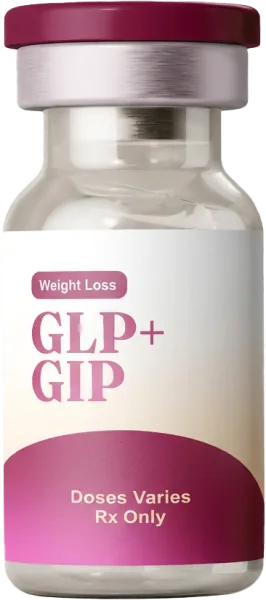
Compounded Tirzepatide Weight Loss Program
Monthly weight management program · compounded tirzepatide
In stock · Ships free to all 50 U.S. states
Free medical intake · you are charged only if a licensed provider approves treatment
- $129.00 USD charged today as an introductory first month, then $369.00 USD every month until you cancel.
- No consultation fee, no shipping fee, no pharmacy fee. The stated price is the total monthly price.
- The price does not change when your prescribed dose changes.
- Longer plans lower the monthly price: the 3-month plan is $316.00 USD per month, charged $948.00 USD every 3 months; the 6-month plan is $299.00 USD per month, charged $1,794.00 USD every 6 months.
- Medication ships every 3 months on both longer plans, so the 6-month plan arrives in two shipments while being billed once.
- Cancel any time before your renewal date in your patient portal or by emailing support@oriameds.com. See our Refund & Cancellation Policy.
What this includes: a bundled treatment plan — clinical review by a licensed provider, the prescribed compounded medication, dose management, care-team access and shipping. It is not a medication-only purchase.
You are charged only after a licensed provider reviews your intake and issues a prescription. If you are not eligible, you are not charged.
About this program
A physician-supervised weight management program built around compounded tirzepatide, a dual GIP and GLP-1 receptor agonist. Includes clinical review by a licensed U.S. provider, the prescribed medication dispensed by a licensed U.S. compounding pharmacy, dose adjustments during treatment, ongoing access to your care team, and free tracked shipping. Prescription required; eligibility is determined by a licensed provider. Available to adults in the United States only.
How tirzepatide works
Tirzepatide is a dual agonist: it activates the GLP-1 receptor and the GIP receptor. GIP — glucose-dependent insulinotropic polypeptide — is a second incretin hormone the gut releases after eating, and engaging both pathways is what distinguishes tirzepatide from semaglutide, which targets GLP-1 alone.
The working theory is that the two receptors act on appetite and insulin sensitivity through partly separate mechanisms, so addressing both produces a larger metabolic effect than either alone. In practice patients report the same core experience as with GLP-1 therapy — reduced appetite, earlier fullness, less food preoccupation — often at greater intensity.
What the clinical evidence shows
Tirzepatide was studied for weight management in the SURMOUNT trial programme. In SURMOUNT-1, adults with obesity or overweight and without diabetes received weekly tirzepatide or placebo alongside lifestyle intervention over 72 weeks; the higher tirzepatide doses produced greater average weight reduction than placebo.
Comparisons between tirzepatide and semaglutide trials are frequently made but should be read carefully: STEP and SURMOUNT were separate programmes with different participants, protocols and durations. A larger average in one trial is not the same as a head-to-head win, and individual response varies widely in both.
Dosing and titration
Tirzepatide is a once-weekly subcutaneous injection, starting at a low dose and increasing in steps over several months. Because it engages two receptors, the titration schedule matters as much as with semaglutide — arguably more, since the gastrointestinal adjustment can be more pronounced at each step up.
Your provider sets and adjusts the schedule based on your response and tolerance. Dose increases are included in the monthly price; the cost does not change as your dose does.
Side effects and safety
The side-effect profile overlaps substantially with other incretin therapies and is mostly gastrointestinal, concentrated in the first weeks and after each dose increase:
- Nausea
- Diarrhoea or constipation
- Vomiting
- Abdominal pain
- Reduced appetite
These usually ease as the body adapts. Raise them with your care team rather than stopping on your own — slowing the titration often resolves them without ending treatment.
Serious risks include pancreatitis, gallbladder disease, kidney problems from dehydration, and thyroid C-cell tumours observed in rodent studies. Tirzepatide is not appropriate for people with a personal or family history of medullary thyroid carcinoma or Multiple Endocrine Neoplasia syndrome type 2. Your medical intake screens for these, and your full history — including all medications and supplements — matters to that review.
Is tirzepatide the right choice?
Tirzepatide costs more than semaglutide and produced larger average reductions in its trials, but "stronger on average" is not the same as "better for you". Providers weigh medical history, current medications, prior response to GLP-1 therapy, tolerance for gastrointestinal side effects, and what is sustainable long term.
Some people do well on semaglutide and never need to escalate; others respond modestly to it and do better on a dual agonist. Some are candidates for neither. Read the full comparison before your intake, and bring your medication list and family history to the review.
Eligibility
- Adults 18 years or older, residing in the United States.
- Requires completion of a medical intake and review by a licensed provider.
- A prescription is issued only if a provider determines treatment is appropriate. Not all applicants qualify.
- A synchronous telehealth consultation may be required depending on your state.
Compounded medications are prepared by a licensed pharmacy when prescribed by a licensed provider. Compounded medications are not FDA-approved, and the FDA does not verify the safety, effectiveness, or quality of compounded drugs.
Oria Meds facilitates access to telehealth services provided by independent licensed medical providers. Oria Meds does not practice medicine and does not guarantee that any patient will receive a prescription. Prescription medications require a valid prescription. Service availability varies by state and jurisdiction.
This website is not intended for emergencies. If you are experiencing a medical emergency, call 911 or seek immediate medical attention.